

While Zen Buddhism and the New Testament of the Bible originate from distinct spiritual traditions with different theological frameworks, there are interesting areas of connection and dialogue that have been explored, particularly in the realm of mysticism, ethics, and human experience.
The realm of mysticism (- experiencing Oneness with Source – Communication) is the realm we will relate to and focus on in the series Zen & The New Testament.
An example of a connection
Mystical Experience – beyond words and concepts
Zen emphasizes direct, unmediated experience of reality through practices like zazen (seated meditation) and the use of koans to break through conceptual thinking. The goal is satori (enlightenment) or kensho (seeing one’s true nature), which is a non-dualistic realization beyond words and concepts.
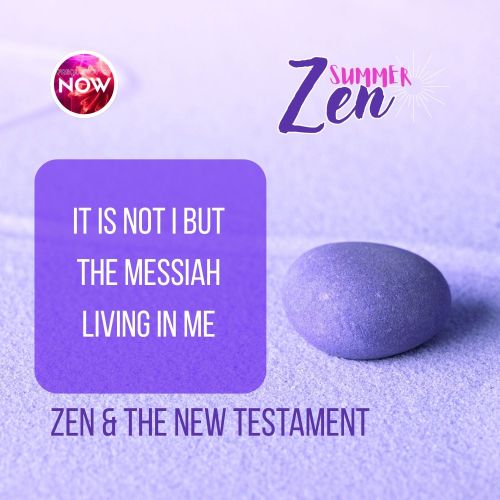
New Testament – Christian Mysticism. An example from Christian mysticism. Meister Eckhart in his “The Cloud of Unknowing” emphasize an “apophatic” path: approaching God through negation, acknowledging that God transcends human concepts and language. This resonates strongly with Zen’s emphasis on emptying the mind to encounter Reality. Some Christian mystics speak of a “union with God” or “Christ living in me” (as St. Paul said), which is as the non-dualistic experience in Zen. *(see bible expression below)
* 19For I by The Written Law have died to The Written Law that I might live unto God. 20And I have been crucified with The Messiah, and from then on I myself have not been living, but The Messiah is living in me, and this that I now live in the flesh, I live by the faith of The Son of God, he who has loved us and has given himself for us. 21I do not reject the grace of God, for if righteousness is by The Written Law, The Messiah died for nothing.
Galatians 2 (Aramaic Plain English Bible)
Practices we perform
Practices like contemplative prayer and centering prayer in Christianity are in nature similar with Zen meditation in their focus on silence, inner stillness, and going beyond mental constructs. We experienced this in a previous series with Zen-tabernacling. But we continue to explore and deepen our mystical experience.
In the series Zen & The New Testament we will actively use a variety of practices to allow a discovery that can deepen your mystical experience.
You are wholeheartedly invited to join us in this new series:
 Inner Work Inspiration Hub